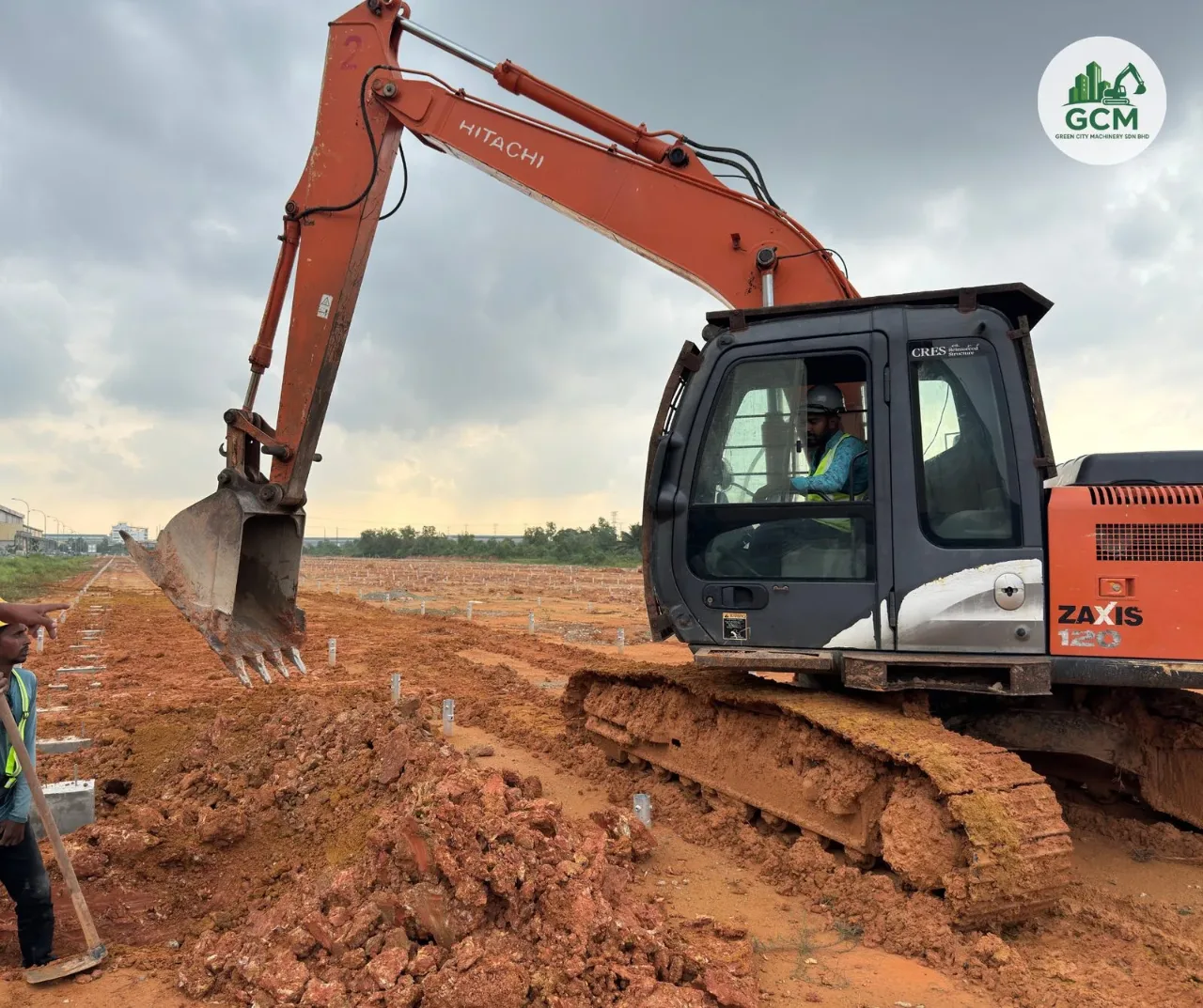
JOHOR BAHRU · ISKANDAR PUTERI · GELANG PATAH

Mini Excavator (3-Ton) Rental
in Johor Bahru

1,550 mmMachine Width
2.82 mDig Depth
4.90 mDig Reach

Fully Operated. CIDB-Certified. 24H Mobilisation.

13 Years On Johor Sites50+ Units in FleetCIDB / JPJ / NIOSH Certified24H Mobilisation Guaranteed

3-Ton · Compact Access

What the Mini Can Do, and Where It Has Done It

If the machine can get through the opening, it can do the work. At 1,550 mm wide it passes where a full-size excavator stops, and the short tail lets it turn inside a bay without catching what is behind it.

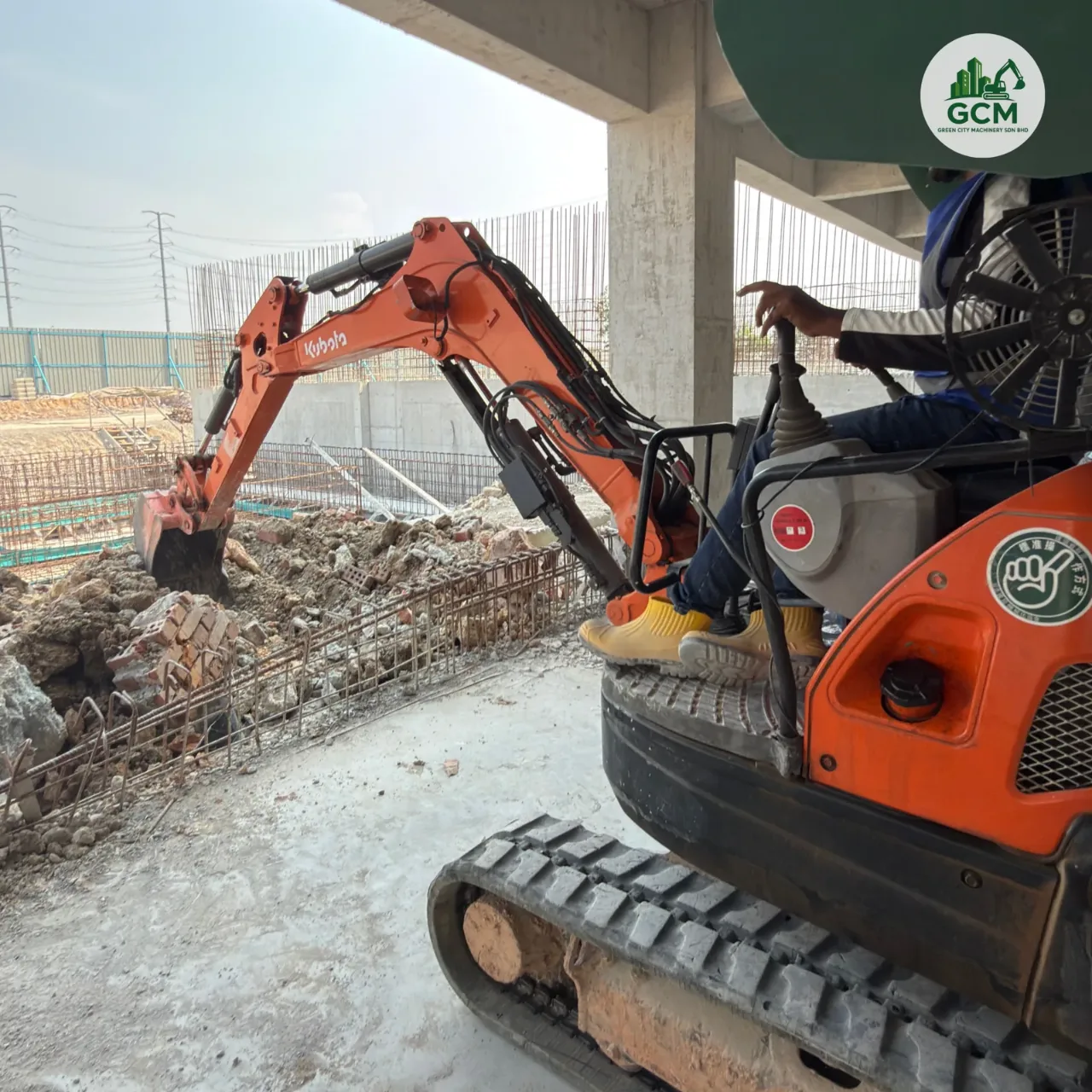
green city machinery mini excavator 3 ton johor bahru3-tonne mini on site in Johor. 1,550 mm wide, rubber tracks, short tail.

Hire the mini when the job looks like this

  • Inside a finished structure: internal pipe and service routes cut under a cast deck, in a column bay a full-size machine cannot enter.
  • Gates, side lanes and back yards: 1,550 mm through the opening, then working room on the other side.
  • Drain, cable and utility trenching: clean, accurate trenches for pipe and cable laying.
  • Landscaping and site preparation: grading, clearing and shaping on tight plots without tearing up what is already finished.
  • Footings and foundation digs: precise excavation on residential and light commercial lots.
  • Backfilling and levelling: in restricted access areas where manoeuvrability matters more than bucket size.
A mini excavator is a compact tracked excavator. Ours is a canopy build: 1,550 mm overall width, 3,155 kg operating weight, a 790 mm tail swing radius so the counterweight stays close to the track line, and rubber tracks that cross a finished slab without marking it.
Site Records · Johor

Where it has actually worked

Under a completed concrete deck · Between standing solar pole rows

Two jobs explain this machine better than a spec sheet does. Neither was sized by how much soil had to move. Both were sized by what the machine had to fit through.
What both sites had in common

  • Access decided the machine, not power. On both jobs the question was never breakout force. It was whether the machine could physically get to the work.
  • 1,550 mm across the tracks. A column bay on one site, a fixed pole row on the other. The width is what let it travel without asking anyone to move anything.
  • 790 mm tail swing. It turns in position without the counterweight catching a column behind it or a pole beside it.
  • Ground already finished or already set out. Rubber tracks crossed a cast slab on one site and a laid-out solar field on the other without marking or disturbing either.

On the solar site the client had started the footings with a 20-ton short tail. It had the power. It simply could not move between the rows without repositioning again and again. That is the pattern on both jobs: more power does not solve access. If your works sit inside a structure that is already up, or between things that are already positioned, this is the class of machine that goes in. On the solar field it went in paired with a 12-ton doing the lifting, both machines and both operators from us, on one order.

Rubber or Steel Tracks · We Run Both

Which Track Your Surface Needs

We run the 3-tonne in both builds. At 1,550 mm wide and 3,155 kg it fits where a full-size machine stops, and which track it arrives on is what decides whether it is allowed onto a finished surface at all.

Finished slab, tiles, tarmac, turf Weight spread across the whole belt RUBBER TRACK
Rubber track. One continuous belt sitting flat on the ground. The machine's weight is carried across the whole belt, so it crosses a finished surface and leaves it as it found it. This is the build we send onto anything already finished.
Scored, cracked, gouged Weight driven onto the bar edges STEEL TRACK
Steel track. Grouser bars bite in, which is what gives grip on raw earth. On a slab, a driveway or turf those same bars are what scores, cracks and gouges the surface, so this is the build for raw earth and rock.

Schematic, not to scale

Sealed car parks and driveways

Tarmac, interlocking block and stamped concrete. No steel grousers means no scoring on a surface you have to hand back in the same condition.

Inside factories and warehouses

Works on a finished slab between racking and machinery. The site needs open sides or mechanical ventilation, because it is still a diesel machine.

Housing and shoplot backyards

Fits through openings from about 1.6 m, so it gets down the side of a terrace house or through a shoplot rear gate that a 12-ton cannot reach.

Live solar farms

Travels between installed panel rows for internal pipe and cable trenching, without disturbing the array or the compacted ground under it.

Turf, landscaping and school fields

The weight sits across the full track belt instead of digging in on steel edges, so grass, planting beds and soft ground recover after the works.

Occupied and noise-sensitive premises

Schools, clinics, hotels and malls. Rubber on concrete does not clatter the way steel does, and track noise is usually what generates the complaints.

Tell us the ground before we mobilise. Rubber is the wrong choice on sharp blasted rock or long travel over crusher run: that is a steel-track job, and we have both. Work on a suspended slab still needs your engineer to sign off on the point load. Tell us what the machine will be standing on and we will send the right build.

Working Range

Mini Excavator Working Range & Specification

The three numbers that decide whether this machine can get in, and still reach what you need.

1,550 mmOverall machine width
2.82 mMaximum digging depth
4.90 mMaximum digging reach
Machine3-tonne mini excavator, canopy
BuildRubber or steel tracks, both in the fleet
Operating weight3,155 kg including operator
Transport size4,530 mm long · 2,470 mm high · 1,550 mm wide
Tail swing790 mm radius. Short tail, close to the track line
Bucket570 mm wide · 0.1 m³ · breakout force 30.1 kN
Auxiliary hydraulics50 L/min service port at the arm, breaker ready

Width is the number that decides the job. At 1,550 mm the machine passes through a standard gate opening and most column bays, and the 790 mm tail radius lets it turn inside a bay without the counterweight catching what is behind it. Rubber tracks let it cross a finished slab or a paved driveway without marking the surface. Figures are for the canopy, rubber-track build of our 3-tonne, taken from the manufacturer dimension drawing for the machine that goes out.

Can It Get Under Your Deck and Still Reach the Trench?

Drawn to scale from the manufacturer's dimension drawing. The man and the 3 m soffit are there so you can judge the machine against something you already know.

Concrete deck already cast Ground level Service trench 1.7 m 4.25 M MAX DIG HEIGHT, IN THE OPEN 2.47 m machine height 2.82 m max dig depth 4.90 m max reach from swing centre 3.00 m clear soffit

Drawn to scale, 1 m = 68 px, from the manufacturer working range drawing. Ground conditions and bucket choice change what the machine achieves in practice.

Be Realistic

What You Give Up for the Access

A mini gets into places nothing else can. It does not move volume. Any supplier who tells you a 3 tonne machine replaces a 20 tonne one on open ground has not costed the job. Three trade-offs to price in before you book it:

Bucket: 0.1 m³

A 20 tonne front carries roughly 0.5 to 1.3 m³. That is five to thirteen times more per pass. On open ground with room to work, the bigger machine finishes sooner and costs you less in total, even at a higher day rate.

Depth stops at 2.82 m

Deep drainage, pile caps and basement excavation sit outside this machine's envelope. If the dig goes past roughly 2.5 m and you still need working room at the bottom, you are looking at the wrong class of machine.

Breakout force: 30.1 kN

Topsoil, sand and backfill are comfortable. Hard laterite, compacted hardcore and rock will slow it right down. For those the machine needs a breaker on the service port, or a heavier carrier does the work instead.

The honest rule: hire the mini when the problem is access, not volume. Restricted sites, work inside a finished structure, landscaping, internal drainage and service trenches. When the ground is open and the quantity is large, put a 12-tonne or a 20-tonne excavator on it instead. If the access stays tight but the job outgrows 3 tonnes, the short tail at 1.68 m tail swing is the next step up. If the problem is depth rather than access, it is the long arm at 12 m. And the spoil still has to leave site, so we usually quote the tipper alongside it.
Documentation

Our Own Machines, Start to Finish

On a data centre or infrastructure site the machine does not get through the gate, the paperwork does. Here is what comes with the unit.

Our own machine, our own fleet

Every machine we send out is our own: booking, operator, servicing and anything that comes up on site. One company, one number to call

Insured

Mobile plant & equipment policy, current, covering the machine on site and in transit

Serviced monthly

Signed 14-point service, maintenance and inspection sheet: oils, coolant, greasing, leak check, tracks, filters, final drive, swing motor

CIDB-registered operator

EXH2 Hydraulic Excavator Operator competency, Level 2. Working inside a finished structure is not a job for an untrained seat
We hand you the submission pack. Ownership grant, insurance, service history, operator registration and competency certificate, and the machine dimension drawing, compiled for main-contractor submission before the unit leaves our yard.
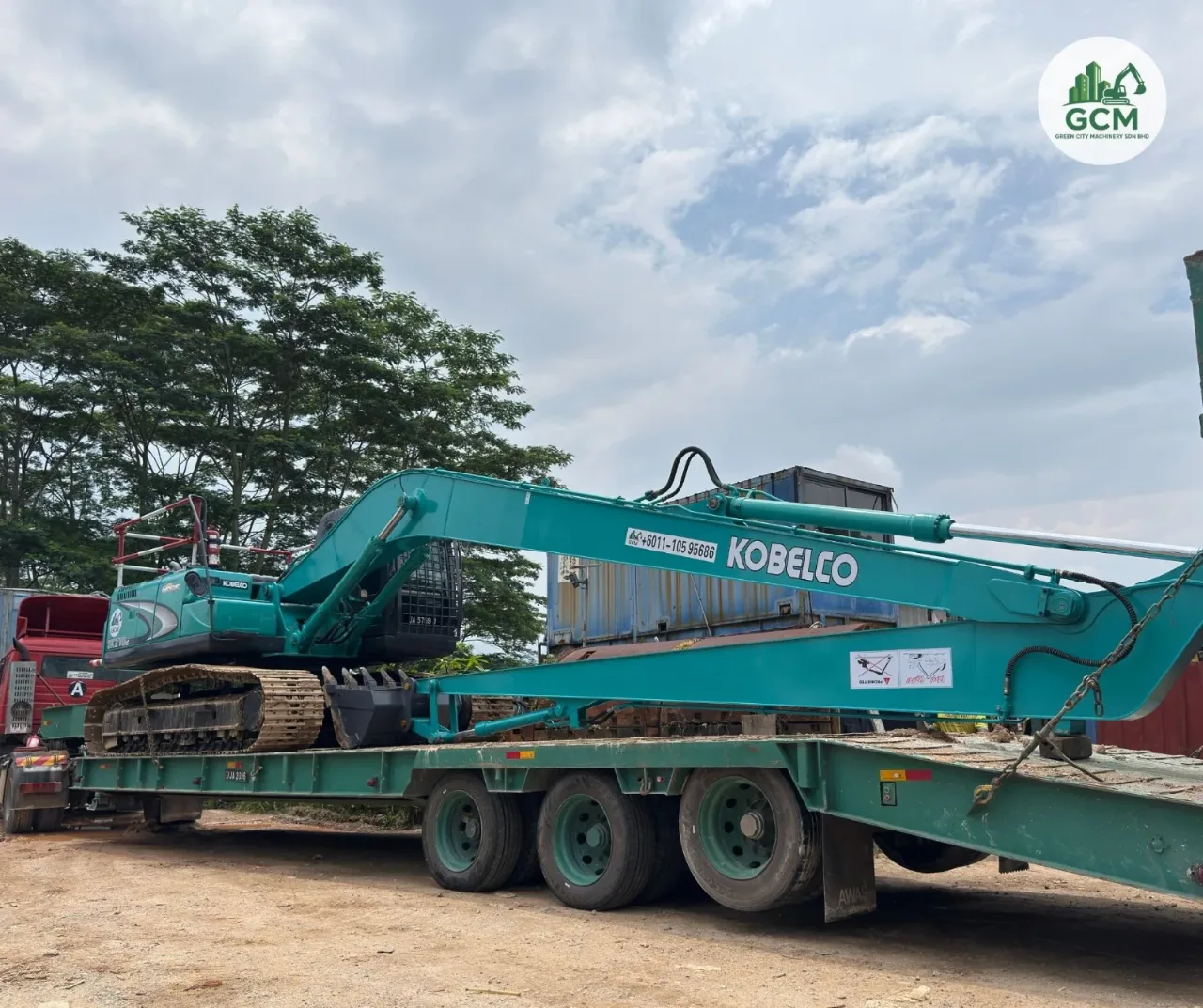
Green City Machinery long arm excavator loaded on a low loader for delivery to an Iskandar Puteri site

Not Sure Which Excavator Suits Your Project?

Contact us with your site location and scope of work.
We’ll recommend the right machine and confirm availability. Same day.

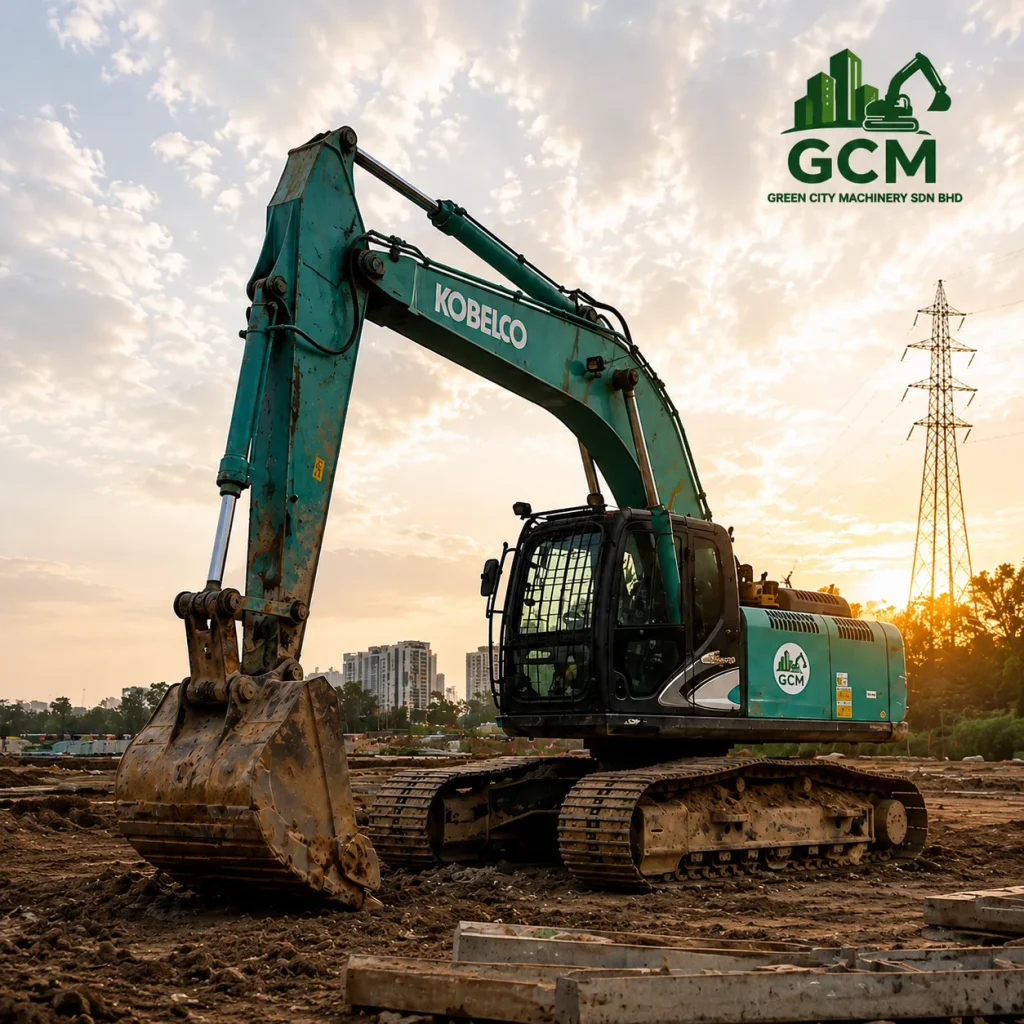
green city machinery (gcm) why choose us cover photo

Why Contractors in Johor Bahru Choose Green City Machinery

🕐 24-Hour Mobilisation
Confirm today and we put machine and operator on site within 24 hours, across Johor Bahru and surrounding districts.

🏅 100% Certified Operators
Every operator is CIDB-registered, JPJ and NIOSH-licensed. PPE-compliant and experienced on active construction sites.

📦 One Call, One Supplier
Machine, operator, transport and fuel, all in one rental. No chasing separate contractors or managing multiple vendors.

📅 13 Years of Project Experience
Since 2013, supporting earthwork, infrastructure and data centre projects across Johor Bahru, Iskandar Puteri and Gelang Patah.

Years On Site
0 +
Units in Fleet
0 +
Projects Completed
0 +
Mobilisation Guaranteed
0 H

What Contractors Say About GCM

“We started on a 20-ton short tail but it was too big to move around site. GCM arranged a 12-ton and a new 3-ton within a short time — making our footing works much easier.”

— Mr. Lim · Solar farm footing · Client feedback

“The 3-ton and 12-ton move smoothly on our tight site full of pre-set poles that can’t be hit. Skilled operators who work closely with our site team.”

— Fikir · Solar farm · Client feedback

Frequently Asked Questions: Excavator Rental in Johor Bahru

Yes. Every rental is fully operated: CIDB, JPJ and NIOSH-licensed operator included as standard. We do not offer machine-only hire.

Within 24 hours of confirmed booking. Our base in Skudai covers Johor Bahru, Iskandar Puteri, Gelang Patah and surrounding areas with fast turnaround.

Yes — the 3-ton mini is compact enough for standard gates, side passages and indoor works, with low ground pressure that is gentle on finished or soft ground. It runs standard digging and grading buckets; it does not carry a breaker or ripper.

Monthly rental is standard, with most projects running 3 months or more. Shorter-term rental can be arranged. Contact us to discuss your project needs.

Johor Bahru, Iskandar Puteri, Gelang Patah, Skudai, Kulai, Senai, Nusajaya, Pasir Gudang and surrounding Johor areas. Nationwide projects on request.

Get a Same-Day Quote for
Excavator Rental in Johor Bahru

Tell us your site location, machine type needed and start date.
We’ll confirm availability and send a quote. Same day.

WE MOBILISE. YOU BUILD.

Scroll to Top