
The default answer on any large project is to send the biggest machine that fits. It is usually the wrong default once the site stops being open ground. Here is how we decide between a backhoe and a tracked excavator when the job is loading spoil into tippers.
The question is not bucket size, it is cycle time on your actual site
A 20-tonne excavator moves more material per bucket than a backhoe. That comparison only holds if the machine can sit in one position and keep swinging. On a formed platform with a structure up, services in, and traffic routes marked out, the machine usually cannot. It repositions, waits for a truck to line up, tracks around an obstruction, and repositions again. Each of those costs more than the difference in bucket size gained.
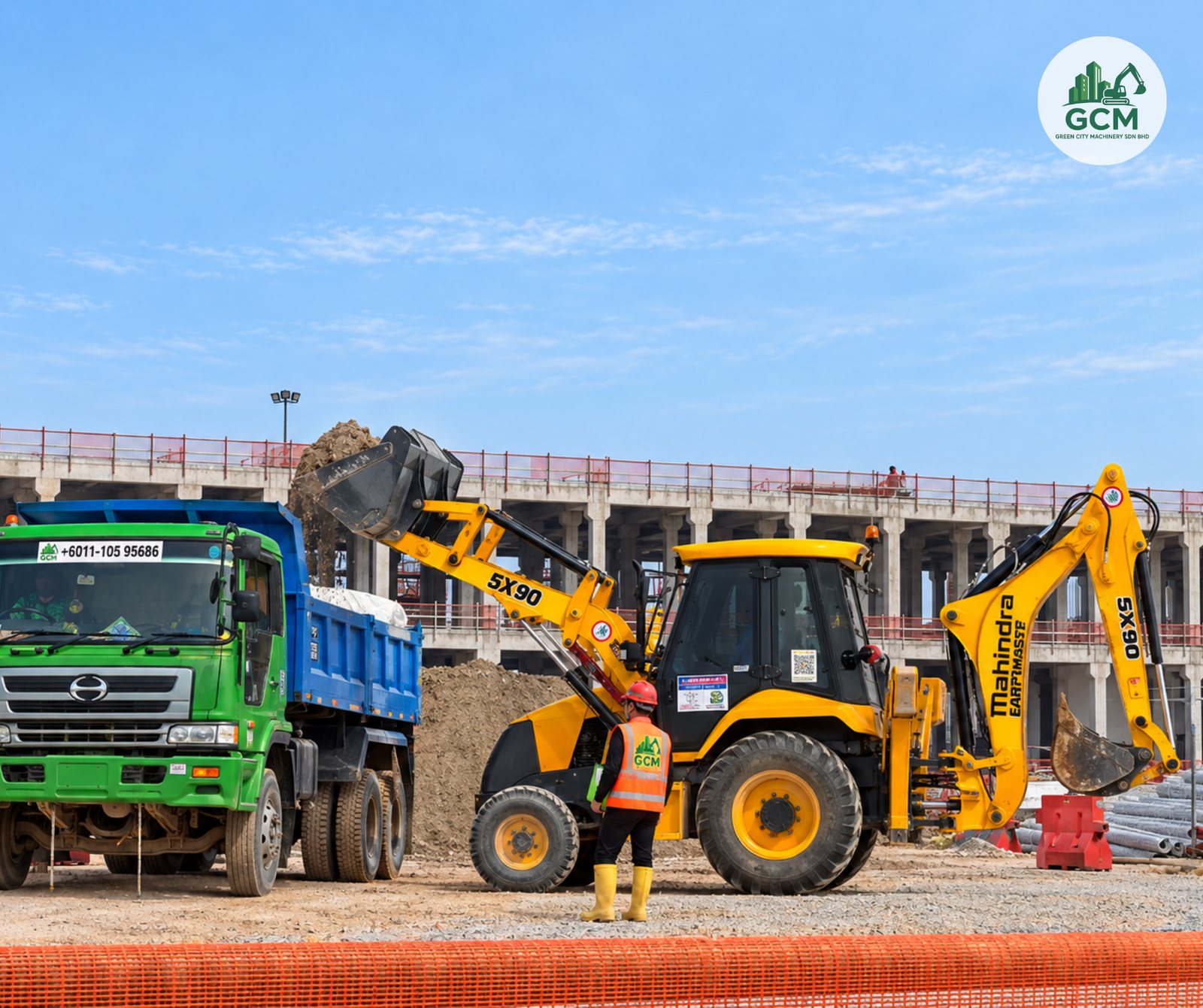
Where a backhoe wins
Choose a backhoe when the site is already built up and the work is loading rather than bulk excavation. It drives between positions on wheels instead of tracking, so moving around a live site costs minutes rather than a machine move. It works close to a finished edge without the counterweight overhang of a tracked machine. It can tuck in beside a truck in a lane width that a 20-tonne cannot use. And because it has a loader bucket at the front as well as a backhoe arm at the rear, the same machine that loads can also tidy, backfill and level without swapping plant.
Where a tracked excavator wins
Choose the tracked excavator when the volume is genuinely bulk and the ground is open, when you are working below the truck level in a deep cut, when the material is hard enough to need a breaker or ripper, or when you need reach the backhoe simply does not have. On raw ground with a long face and nothing in the way, a 20-tonne will out-produce a backhoe comfortably.
The decision changes during the project
This is the part most people miss. The same site wants a different machine at different stages. Early bulk earthworks is excavator work. Once the platform is formed and the structure goes up, the same volume is better handled by a backhoe. Treating machine choice as a one-time decision at tender stage is how sites end up paying for a machine that spends half its day repositioning.
Whichever you pick, the truck decides the rate
Loading capacity is meaningless without matched haulage. A machine that fills a body in four minutes and then waits eleven minutes for the next truck is running at a third of its rate, and you are paying for all of it. Before comparing machine rates, check that the number of lorry tippers matches the loading rate and the round trip time to the tip destination.
This is the main reason we quote the machine and the tipper together. If the two do not match, we are the ones sitting idle, so the incentive to get it right sits with us rather than with the client. It also means a change to the programme is one phone call instead of a negotiation between two suppliers with different priorities.
A short checklist before you book
Is the site open ground or already built up? Is the work bulk excavation or loading and tidying? Do you need reach or depth beyond a backhoe arm? Is the material hard enough to need an attachment? How many trucks do you have, and what is the round trip to the tip?
Answer those five and the machine picks itself. If you would rather just tell us the site and the stage it is at, that works too. Contact us at +6011-105 95686.
Need This Machinery on Your Johor Site?
Operated excavators, backhoe loaders, lorry tippers and low loader transport - delivered to sites across Johor and ready to work the same day.